
110 minutes
10 servings
Easy
CALORIES (PER SERVING)
500 kcal
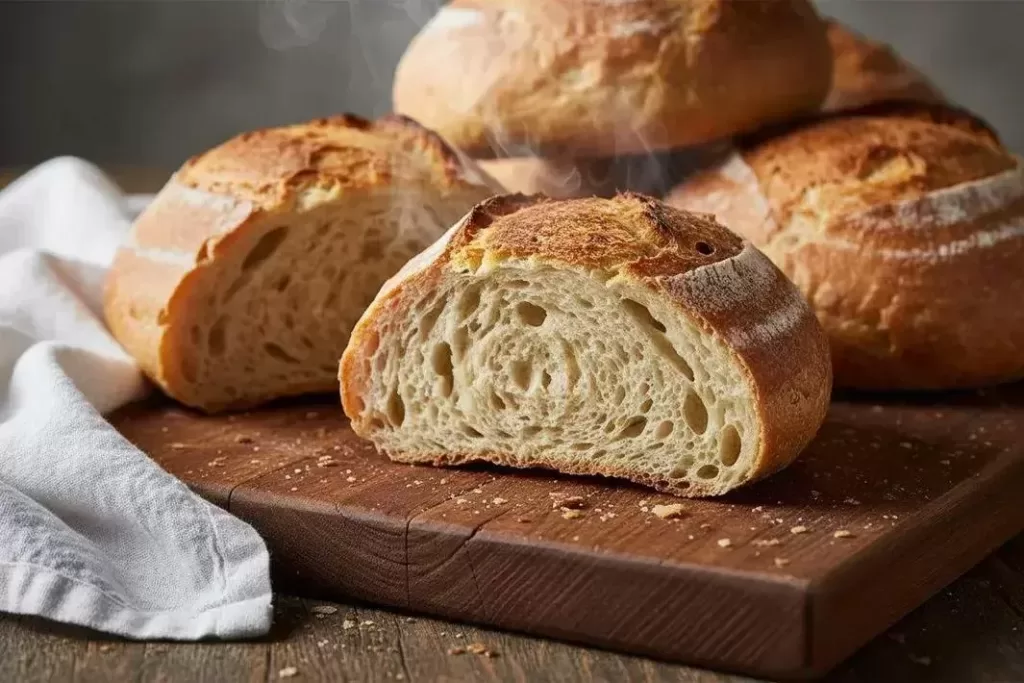
Few things surpass the aroma of Homemade Bread fresh out of the oven, evoking memories of home and family coziness. This simple and tested recipe results in a soft and fluffy bread, ideal to start the day. With basic ingredients like flour, eggs and milk, prepare in 110 minutes for 10 delicious servings of Homemade Bread.
Homemade Bread – Today we’re going to prepare fluffy and soft Homemade Bread with flour, eggs and milk in 110 minutes for 10 servings. Knead well for perfect texture and irresistible homemade aroma at breakfast. Easy and delicious! Shall we make it together?
Ingredients for Homemade Bread
- 1 kg of wheat flour – Main base that forms the elastic structure of the dough.
Tip: Prefer common wheat flour for better yield. - 3 eggs – Add moisture and enrich the softness of the bread.
Substitution: For a vegan version, use hydrated flaxseed equivalent. - 3 tablespoons of sugar (45 g) – Balances the salt and activates the yeast for perfect rising.
Tip: Brown sugar for a slight caramelized touch. - 2 teaspoons of salt (10 g) – Enhances flavors and strengthens the gluten in the dough.
- 1 can of cream (200 g) – Ensures creaminess and juiciness in the bread’s crumb.
- 4 tablespoons of oil (60 ml) – Contributes to softness and preserves moisture after baking.
- 1.5 cups of whole milk (360 ml) – Essential hydrator to dissolve the yeast and soften the dough.
Substitution: Reconstituted powdered milk or vegetable milk for intolerants. - 3 cakes of fresh biological yeast (45 g) – Responsible for the rising and characteristic aroma of homemade bread.
Utensils for making Homemade Bread
Organizing the utensils before starting ensures a smooth flow in preparing the Homemade Bread, avoiding interruptions and facilitating the mise en place essential for fermenting doughs.
- Large container or deep bowl
- Wooden spoon or silicone spatula
- Clean surface for kneading (floured countertop)
- 2 English cake pans (26 x 10 x 7 cm) or greased loaf pan
- Oven preheated to 180°C
How to make Homemade Bread
- Prepare the dough base: In a wide bowl, place all the wheat flour and create a central cavity. Add the eggs, sugar, salt, cream and oil into this hole. Mix everything with your hands or a spoon until forming an initial homogeneous composition, gradually incorporating the flour around – this avoids lumps and facilitates gluten development.
- Activate the yeast and knead the dough: Dissolve the yeast cakes in warm milk (about 40°C, to not kill the yeasts), then incorporate into the previous mixture. Work vigorously for exactly 10 minutes on a floured surface, folding and pressing until obtaining a smooth, elastic dough that doesn’t stick to your hands – kneading activates the gluten, essential for the fluffy structure of the Homemade Bread.
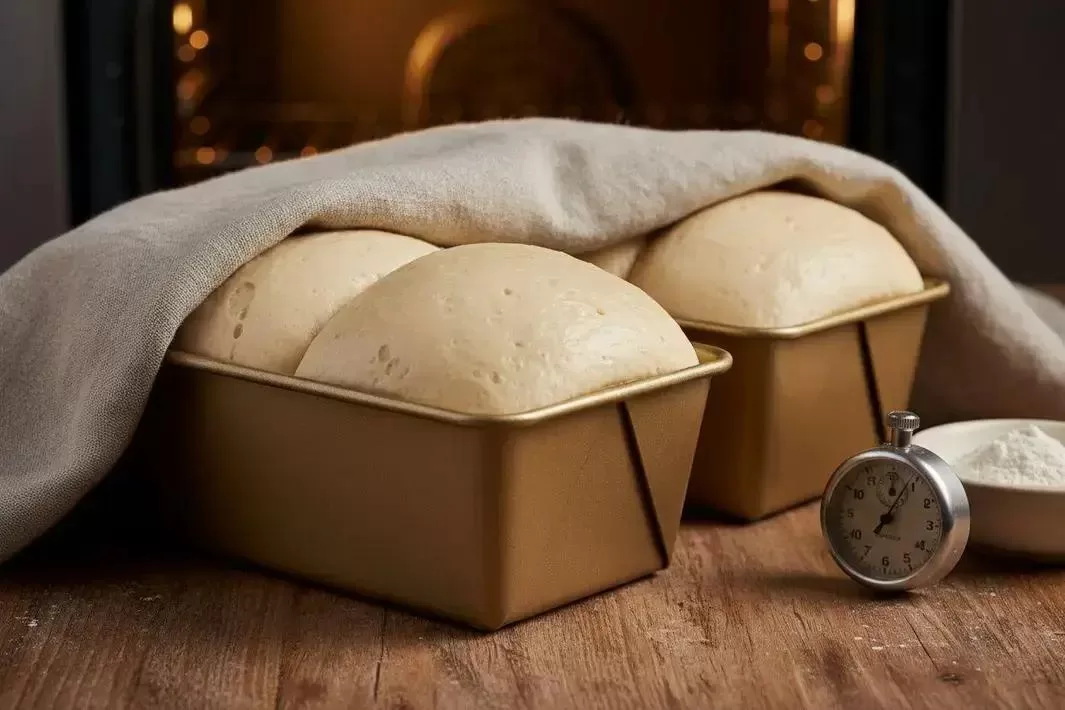
- Ferment and shape: Cover the dough and let it rest in a sheltered place for 30 minutes until it doubles in volume. Divide into two equal parts, transfer to the greased English cake pans (26 x 10 x 7 cm) and cover again for another 30 minutes of rest – observe bubbles on the surface as a sign of active fermentation.
- Bake until golden: Preheat the oven to 180°C (medium) and bake the pans for 40 minutes, rotating halfway if necessary, until the crust is crispy and golden, tapping lightly for a hollow sound – remove and let cool on a rack to preserve internal moisture.
Secret to fluffy bread: Do not open the oven in the first 20 minutes to avoid the dough collapsing from steam loss, maintaining the ideal volume.
Nutritional Information for Homemade Bread
The values below are approximate estimates per serving (1/10 of the total), calculated based on official food composition tables like TACO/TBCA and USDA FoodData Central, and may vary depending on the ingredients used and preparation method.
| Nutrient | Amount per serving | % DV* |
|---|---|---|
| Calories | 500 kcal | 25% |
| Carbohydrates | 70 g | 23% |
| Proteins | 12 g | 24% |
| Total fats | 10 g | 18% |
Macronutrient distribution per serving
Data source: Values calculated based on the recipe quantities, using the Brazilian Food Composition Table (TBCA) for flour, milk and eggs and the USDA FoodData Central for cream and oil.
TBCA | USDA. *% Daily Values based on a 2000 kcal or 8400 kJ diet. Your daily value may be higher or lower depending on your energy needs.
Tips for Perfect Homemade Bread
These special tips are tested tricks to ensure the success of your Homemade Bread, avoiding common mistakes like heavy dough or hard crust. Follow them for fluffy and professional results at home.
- Knead for at least 10 minutes: This step develops the gluten, creating the elastic network that retains fermentation gases – feel the dough become smooth and pass the windowpane test (stretch without tearing).
- Keep the milk warm (35-40°C): Ideal temperature activates the yeast without killing it; test with your finger – it should be bearable, not too hot to preserve the live yeasts.
- Do not open the oven in the first 20 minutes: Avoid steam loss and dough collapse; the initial rise depends on even heat to form the crispy outer structure.
- Use oven preheated to 180°C: Starts starch gelatinization quickly, promoting a golden crust and moist interior – position the rack in the middle for air circulation.
- Cover during fermentation: With plastic wrap or damp cloth in a draft-free place to double in volume in 30 minutes; observe bubbles on the surface as a ready sign.
- Avoid excess flour when kneading: Add only what’s necessary to not stick; dry dough results in dense bread – aim for a soft, sticky but manageable consistency.
- Baking test: hollow sound: Tap lightly on the bottom after 40 minutes; if it resonates empty, it’s perfect – let cool on a rack for steam to escape and avoid a moist base.
Variations of Homemade Bread
The base Homemade Bread recipe is flexible, allowing simple adaptations that maintain the fluffy texture and homemade flavor, adjusting for specific diets or regional touches without changing the fundamental kneading and fermentation process.
- Healthy Whole Wheat Homemade Bread: Replace 30% of the wheat flour with whole wheat for extra fiber, adding flaxseeds to the dough – ideal for nutritious snacks, keeps fermentation time.
- Light Vegan Homemade Bread: Use vegetable milk instead of whole and ‘eggs’ from flaxseed (1 tablespoon per egg with water), preserving the creamy softness of the cream with coconut – perfect for intolerants, bake normally.
- Aromatic Homemade Bread with Herbs: Incorporate dried herbs like oregano or rosemary (2 teaspoons) into the initial dough, elevating the flavor to pair with soups – bake quickly in the oven at 180°C for 35-40 minutes.
- Sweet Homemade Bread with Orange Zest: Increase sugar to 5 tablespoons and add zest from 1 orange, brushing condensed milk after baking – versatile for breakfast, yields indulgent-soft servings.
- Homemade Bread with Caramelized Onion in the Dough: Mix 1 medium onion sautéed with sugar in the final knead for a smoky flavor, covered during rest – great for savory snacks, control moisture to avoid hardening.
Ingredient Tips for Homemade Bread
For perfect Homemade Bread, prioritize fresh ingredients: sifted flour for lightness, active yeast tested in warm water and room-temperature eggs. Common substitutions include vegetable milk for whole (maintaining volume) or gluten-free flour for special diets, preserving the soft texture with rich cream. Nutritionally balanced, it combines energy carbohydrates with proteins from eggs and healthy fats from oil, ideal as a base for complete meals.
- Fresh wheat flour: Choose with 11-12% protein for strong gluten; store in a dry place to avoid moisture that compromises the dough.
- Whole milk and cream: Increase softness and dairy flavor; opt for whole for perfect emulsion, or lactose-free for inclusion.
- Fresh eggs: Source of complete proteins and lecithin that stabilizes the dough – check expiration for maximum freshness and uniform bubbles.
- Fresh biological yeast: Active ensures rising; test by dissolving in warm milk – bubbles indicate vitality for authentic aroma.
Storage and Preservation
Store fresh bread in a paper bag for 2-3 days in a cool, dry environment to maintain crunchiness. In the fridge, it lasts 5 days (wrap in plastic to avoid drying), but may harden – re-crisp in the oven at 150°C for 5 minutes. Freeze sliced in vacuum bags for up to 1 month; thaw at room temperature and warm in toaster for original texture without flavor loss.
Now that your Homemade Bread is ready, sliced and exuding irresistible aroma, serve it still warm with melted butter, fresh cheese or homemade jam. The golden crispy crust contrasts perfectly with the fluffy crumb, ideal for quick sandwiches or simply plain for moments of pure comfort.
This delight is perfect for family breakfasts, afternoon snacks or cozy dinners. With the confidence of our foolproof recipe, you can repeat it anytime, adapting for busy days or special occasions.
To pair with this versatile bread, combine with our Creamy and Easy Stuffed Nest Oven Pasta, creating a complete and comforting meal where the bread absorbs the creamy flavors.
Or try serving as a base for
If you liked it, share with your friends and family! Did you like this recipe?