

15 minutes
2 servings
Easy
CALORIES (PER SERVING)
94 kcal
Mixed Mash – Discover how to make creamy and light mixed mash with potato, carrot, turnip, and celery cooked until soft, finished with skim milk, light margarine, and nutmeg. Ready in 15 minutes for 2 low-cal portions (94 kcal each), vegetarian gluten-free, perfect with grilled fish. Let’s try this simple delight?
Mixed Mash Ingredients
- 1 medium potato – Main base that ensures creaminess and soft texture in the mixed mash.
Tip: Choose firm potatoes without sprouts for best results. - 1 medium carrot – Adds natural sweetness and vibrant color to the mixed mash.
Substitution: Use sweet potato for a sweeter version. - 50 g turnip – Contributes mild flavor and slight bitterness that balances the mixed mash.
- 1 celery stalk – Brings freshness and subtle crunch before mashing in the mixed mash.
- 1/2 cup skim milk (120 ml) – Responsible for the light, diet-friendly creaminess of the mixed mash.
Substitution: Oat milk for vegan version. - 1/2 teaspoon light margarine (about 5 g) – Finishes with a smooth touch without adding many calories to the mixed mash.
- Nutmeg to taste – Essential aromatic that elevates the sophisticated flavor of the mixed mash.
- Salt to taste – Enhances the natural flavors of the vegetables in the mixed mash.
Utensils for Making Mixed Mash
Gather the necessary utensils before starting the preparation of the mixed mash to avoid unnecessary pauses, ensuring a smooth process in just 15 minutes for 2 servings.
- Medium pot (2 liters)
- Sharp knife
- Cutting board
- Vegetable peeler
- Potato masher or ricer
- Wooden spoon or spatula
- Stove with medium heat
How to Make Mixed Mash
- Vegetable preparation: Wash the medium potato, medium carrot, 50 g turnip, and celery stalk well under running water. Peel all vegetables with a peeler to remove impurities and thin skins, preserving the nutritious pulp. Cut into uniform 2 cm cubes for quick and even cooking in about 10 minutes.
- Vegetable cooking: Place the vegetable cubes in a medium pot with enough cold water to cover them by 2 cm. Bring to medium-high heat until boiling, then reduce to medium and cook for 8-10 minutes or until the vegetables are soft enough to be easily pierced by a knife, but still firm to avoid pasty texture in the final mixed mash.
- Draining and mashing: Drain the hot water carefully using a strainer or colander. Return the vegetables to the hot pot (off heat) and pass through a potato ricer or mash vigorously with a hand masher to obtain a smooth paste without large lumps, keeping some rustic texture characteristic of the mixed mash.
- Incorporating liquids and seasonings: Still in the pot over low heat, add 1/2 cup warm skim milk (120 ml), 1/2 teaspoon light margarine, and grated nutmeg to taste. Stir constantly with a wooden spoon for 2-3 minutes until forming a creamy and homogeneous mixture, adjusting salt to taste. The gentle heat activates the margarine without separating the milk.
- Finishing and serving: Taste and adjust seasonings. Turn off the heat and transfer the hot mixed mash to a serving bowl. Serve immediately with grilled or baked fish, like salmon or tilapia, to complement the meal in just 15 minutes total for 2 servings.
Secret to perfect texture: Test cooking by piercing vegetables with a fork – if it slides without resistance, they are ready. Mashing while hot avoids lumps and preserves creaminess in the mixed mash.
Nutritional Information for Mixed Mash
The values below are approximate estimates per serving, calculated based on official food composition tables (such as TACO/TBCA/USDA) and may vary depending on ingredients used and preparation methods. Considering 2 total servings.
| Nutrient | Amount per serving | % DV* |
|---|---|---|
| Calories | 94 kcal | 5% |
| Carbohydrates | 18 g | 6% |
| Proteins | 3 g | 6% |
| Total Fats | 2 g | 3% |
Macronutrient Distribution per Serving
Data Source: Values calculated based on recipe quantities, using TBCA for vegetables and milk, and USDA FoodData Central for confirmation. *% Daily Values reference for a 2000 kcal diet.
Tips for Perfect Mixed Mash
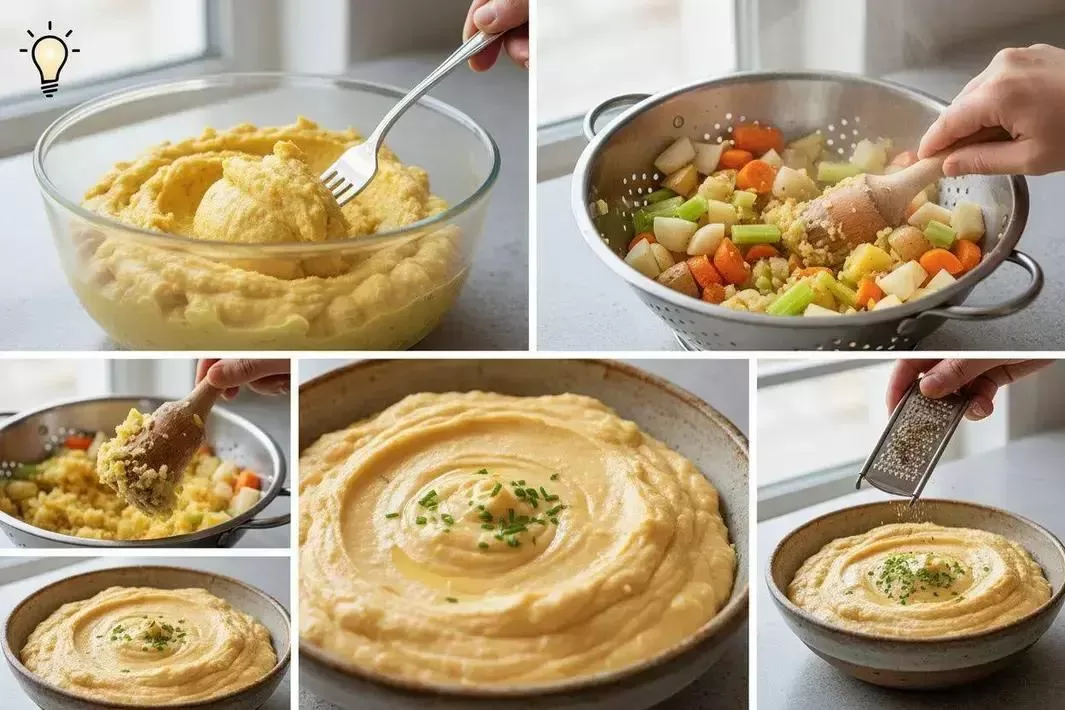
These special tips will ensure your mixed mash is creamy, flavorful, and with perfect texture every time, avoiding common mistakes in just 15 minutes for 2 servings.
- Uniform vegetable cuts: Dice potato, carrot, turnip, and celery into same-size cubes (2 cm) for even cooking, avoiding raw pieces or overly soft ones that compromise the homogeneity of the mixed mash.
- Test cooking point: Poke with fork after 8 minutes – vegetables should slide easily without resistance, sign of ideal softness; overcooking releases excess water, making the mash watery.
- Drain water well: Common mistake is not draining completely, resulting in liquid mash; shake the strainer to remove residual moisture before mashing.
- Mash while hot: Return to hot pot to pass through ricer while warm – residual steam facilitates the process, incorporating air for aerated creaminess without lumps.
- Warm the milk first: Warm the skim milk beforehand to not lower the mixed mash temperature, avoiding separation and ensuring perfect emulsion with light margarine.
- Freshly grated nutmeg: Grate at the moment for intense aroma – excess can bitter, so add to taste in first stirs over low heat.
- Stir over low heat at end: Incorporate ingredients stirring for 2 minutes on minimum flame for flavors to meld without boiling the milk, preserving the diet-friendly lightness of the mixed mash.
Mixed Mash Variations
The versatility of mixed mash allows simple adaptations keeping preparation in 15 minutes for 2 servings, ideal for varied diets or seasonal preferences without altering the creamy vegetable base.
- Vegan mixed mash: Replace skim milk with oat or coconut milk (120 ml) and light margarine with coconut oil (5 g); keeps low calorie and creaminess, perfect for vegans with the same nutmeg aroma.
- Version with light cheese: Add 20 g grated light mozzarella at the end of heating to melt creamy, boosting proteins without exceeding 120 kcal per serving, great for protein meals.
- Mixed mash with fresh herbs: Include 1 tablespoon chopped fresh parsley or chives when seasoning; enhances freshness without extra calories, harmonizing with fish or grilled chicken.
- Spicy version: Sprinkle finely ground black pepper or smoked paprika to taste with nutmeg; adds bold smoky touch to traditional mixed mash, ideal for lean red meats.
- Sweeter with pumpkin: Swap turnip for 50 g cooked kabocha squash; intensifies carrot’s natural sweetness, perfect fall version still diet-friendly and gluten-free.
- Cold mixed mash for salads: After creaminess, cool and mix in light plain yogurt (1 tablespoon); transforms into chilled side for hot buffets, yielding 2 refreshing servings.
Ingredient Tips for Mixed Mash
Choosing fresh, quality ingredients is essential for mixed mash, ensuring authentic flavor, creamy texture, and nutritional benefits like fiber and vitamins in a light, diet-friendly option. Prioritize organic or local producer vegetables to minimize chemical residues, and opt for pasteurized skim milk for creaminess without excess fat. Common substitutions include coconut oil for light margarine in vegan versions, maintaining caloric balance around 94 kcal per serving for 2 total servings.
The balanced nutritional profile highlights complex carbohydrates from vegetables for sustained energy, with low fat and complementary proteins from milk, ideal for vegetarian gluten-free diets. Nutmeg adds antioxidants without significant calories, elevating sensory value while preserving recipe lightness in 15 minutes.
- Fresh potato and carrot: Choose firm without sprouts; provide potassium and beta-carotene, fibrous base that sustains mixed mash creaminess without adding caloric bulk.
- Crunchy turnip and celery: Prefer seasonal for subtle flavor; rich in water and fiber, aid satiety in low-calorie ideal for light diets.
- Skim milk and light margarine: Whole products maintain perfect emulsion; lactose-free version available for intolerants, preserving velvety texture.
- Nutmeg and salt: Use whole freshly grated for aroma; moderate salt for sodium control, benefiting cardiovascular health in daily mixed mash.
Storage and Preservation
Store mixed mash in airtight container in fridge up to 3 days, cooling completely first to avoid condensation. Freeze individual portions in bags for 1 month, thawing in fridge overnight. Reheat over low heat with splash of milk, stirring until creamy again, never microwave to preserve homogeneous texture.
Now that your mixed mash is ready, serve it hot alongside grilled fish like tilapia or salmon, finishing with a light sprinkle of fresh nutmeg to enhance vegetable flavors. The light creaminess and velvety texture make it ideal for balanced meals, perfectly accompanying lean meats or fresh salads in just 15 minutes for 2 servings.
This simple recipe shines in everyday lunches, light family dinners, or even as a side in casual barbecues, bringing home comfort with fresh vegetables’ nutritional benefits and low calories. With gained confidence, repeat whenever you want to vary the menu without hassle.
For a comforting main dish that pairs with the mash, try the Chicken Stew with Tasty Lactose-Free Pumpkin Mash. The creamy contrast with mild flavors complements perfectly.
If preferring a protein option, the Chicken Pie with Creamy Easy Potato Mash elevates family meals, using similar bases for irresistible results.
To vary textures, try our Creamy Easy Gorgonzola Potato Mash, adding gourmet touch to your classic mixed mash.
Can I substitute skim milk for another option?
Yes, for a vegan version use oat or almond milk in the same 1/2 cup amount. Creaminess remains similar, but adjust salt as some plant milks are sweeter. Taste final to balance with nutmeg.
How do I know if the vegetables are at the right cooking point?
Pierce with fork after 8-10 minutes: they should slide easily without resistance, indicating ideal softness without falling apart. If still firm, cook 2 more minutes on medium heat. This texture ensures homogeneous mash after ricing.
Can I prepare the mixed mash ahead? How to store?
Yes, prepare and store covered in fridge up to 3 days. To freeze, individual portions last 1 month; thaw in fridge for 8 hours. Reheat over low heat with a bit of milk to recover creaminess.
My mash turned watery or lumpy. What did I do wrong?
Drain vegetables well after cooking to remove excess water, avoiding liquid mash. Mash while hot to incorporate air and eliminate lumps. If persists, return to pot over low heat stirring for 2 minutes.
How many servings does this recipe yield? Can I double the ingredients?
Yields exactly 2 servings in 15 minutes total. To double, multiply all quantities by 2, using larger pot for even cooking. Time remains similar, about 94 kcal per original serving.
Do I need special equipment to make mixed mash?
No, a ricer or hand masher suffices for smooth texture. Medium pot and regular knife complete. Cook on medium heat for efficiency without expensive items.
Did you like this recipe?
If you liked it, share with your friends and family!

- Juicy Bauru Sandwich with Homemade Roast Beef - 17 de March de 2026
- Refreshing Flavored Water with Fruits and Herbs - 17 de March de 2026
- Creamy and Easy Classic Can Mousse - 11 de March de 2026