
KCALORIES (PER SERVING)
53 kcal
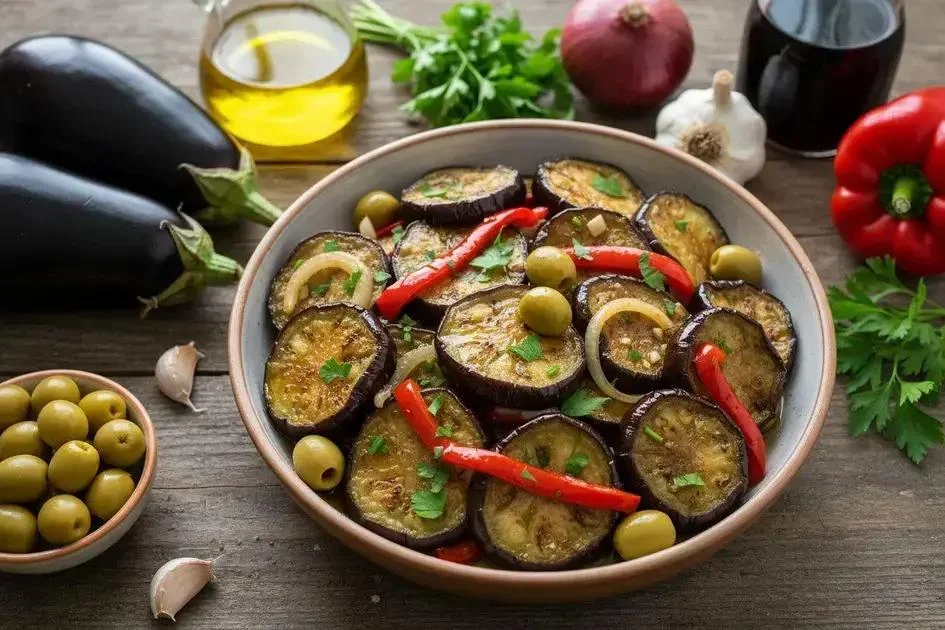
Discover how to prepare a simple and delicious eggplant antipasto, ideal for those seeking vegan, vegetarian, diet, gluten-free, and lactose-free options. This recipe yields 24 servings in just 30 minutes of active prep, although it requires overnight dehydration for the best result. Perfect for appetizers at gatherings or casual dinners.
Eggplant Antipasto – Today we’re making this irresistible vegan appetizer, gluten-free and lactose-free, ready in 30 minutes yielding 24 light servings of just 53 kcal. Dehydrate overnight and cook in low vinegar for perfect texture. Ideal for casual dinners. Let’s impress friends?
Antipasto Ingredients
- 4 large eggplants – Main base that absorbs the flavors of the seasoning and vinegar, ensuring soft texture and intense flavor.
Tip: Choose firm eggplants without spots for best results. - 3 tablespoons of salt (full) (45g) – Used to dehydrate the eggplant, removing excess water and concentrating the flavor.
- 1/2 cup red wine vinegar (120ml) – Adds balanced acidity and helps with preservation of the antipasto.
Substitution: Red wine vinegar or apple cider vinegar for milder flavor. - 5 chopped green olives – Adds crunch and salty flavor that contrasts with the eggplant.
- 1/4 red bell pepper in strips (optional: mix of yellow, green, and red bell peppers) (about 50g) – Provides sweetness, vibrant color, and texture.
Tip: Use assorted bell peppers for greater visual appeal. - 1/4 cup chopped parsley and chives (15g) – Finishes with freshness and herbaceous aroma.
- 3 chopped or crushed garlic cloves – Intensifies the aromatic and spicy flavor of the antipasto.
- 1/2 cup olive oil (120ml) – Binds all ingredients, adds softness, and aids preservation.
- 1/2 onion in strips (optional) (about 50g) – Complements with mild flavor and subtle sweetness.
Substitution: Red onion for color and more delicate flavor.
Utensils for Making Antipasto
Organizing the utensils before starting ensures smooth preparation of the eggplant antipasto, avoiding interruptions and maintaining hygiene during cutting, dehydration, and cooking.
- Sharp knife and cutting board
- Large bowl with lid
- Strainer or colander
- Medium thick-bottomed pot
- Wooden or silicone spoon
- Dish or glass jar for cooling and storing
How to Make Antipasto
- Prepare the eggplants: Wash 4 large eggplants well, peel them completely to remove any bitterness, and cut into thin slices about 0.5 cm thick. This uniform thickness allows the salt to penetrate properly during dehydration, resulting in soft but firm strips in the final antipasto.
- Cut into strips: Take the slices and cut them lengthwise into thin strips, like matchsticks, about 0.5 cm wide. Keep pieces uniform for even cooking and equal flavor absorption – avoid thick pieces that may stay tough.
- Set up for dehydration: Place all strips in a large bowl without rinsing beforehand to avoid extra water buildup. Season with the 3 full tablespoons of salt (about 45g), mixing well with clean hands or a spoon to cover all surfaces. The salt draws out the eggplant’s natural water, eliminating bitterness and concentrating flavors.
- Dehydrate overnight: Cover the bowl tightly and let rest at room temperature overnight (about 8-12 hours). Don’t rinse the bowl before, as that adds unwanted moisture; the natural process removes up to 70% of the water, preparing ideal texture for cooking.
- Drain and rinse: The next morning, dark liquid will have formed – drain everything in a strainer and rinse abundantly under cold running water until it runs clear, removing all salt and residual bitterness. This prevents the antipasto from being too salty or bitter.
- Drain completely: Transfer the strips to a clean cloth or paper towel and squeeze firmly with hands to remove all remaining moisture. Despite the wrinkled, ugly appearance now, this is crucial for concentrated texture and flavor in the end – squeeze in small batches for efficiency.
- Cook in vinegar: Transfer squeezed strips to a medium pot with the ½ cup red wine vinegar (120 ml). Bring to low heat (about 100-120°C, no strong boil) and stir occasionally for 10-15 minutes until slightly softened, incorporating the acidic flavor that preserves and enhances the eggplant.
- Reduce without stirring: Stop stirring and continue on low heat for another 5-10 minutes until strips lightly stick to the pot bottom – this is the perfect visual sign that excess liquid has evaporated and flavors concentrated. Be careful not to burn; use a diffuser if needed.
- Cool: Turn off heat immediately and spread hot strips on a wide dish or shallow plate to cool completely at room temperature (about 30-60 minutes). Quick cooling preserves crunchy texture and stops residual cooking.
- Season: Once cooled, add 5 chopped green olives, strips from ¼ red bell pepper (or colorful mix), ¼ cup chopped parsley and chives, 3 chopped/crushed garlic cloves, ½ cup olive oil (120 ml), and strips from ½ onion (optional). Mix gently to distribute flavors evenly.
- Taste and adjust: Taste the antipasto and adjust salt if needed, adding gradually. Let rest 30 minutes in the fridge for flavors to fully integrate before serving or storing – yields 24 servings in just 30 minutes active prep, plus dehydration.
Antipasto Nutritional Information
Values below are approximate estimates per serving, calculated based on official food composition tables (like TACO/TBCA/USDA) and may vary by ingredients used.
| Nutrient | Amount per serving |
|---|---|
| Calories | 53 kcal |
| Carbohydrates | 4 g |
| Proteins | 1 g |
| Total Fats | 4 g |
| Dietary Fiber | 2 g |
| Sugars | 2 g |
| Sodium | 200 mg |
Macronutrient Distribution per Serving
Data Source: Values calculated based on recipe quantities, using TBCA and USDA FoodData Central.
Tips for Perfect Antipasto

These special tips ensure your eggplant antipasto has perfect texture, balanced flavors, and ideal preservation, avoiding common mistakes like excess bitterness or uneven cooking.
- Optimized salt dehydration: Let eggplants sit in salt overnight to extract maximum water and bitterness, but for quick version, try 30-60 minutes as suggested by experienced cooks – always rinse until water runs clear to fully neutralize salt.
- Squeeze vigorously: After rinsing, press strips firmly with clean hands over a dry cloth; ignore initial wrinkled look, as it concentrates flavors and prevents watery antipasto, ensuring irresistible softness.
- Low heat is essential: Cook in vinegar on minimum flame (100-120°C) stirring only at first; stop when it lightly sticks to pot – infallible sign of perfect reduction, preventing pasty or burnt texture.
- Controlled cooling: Spread on wide dish to cool quickly in open air, stopping residual cooking and preserving subtle crunch that contrasts with olive oil softness.
- Flavor resting: After mixing seasonings, refrigerate for 1 hour before serving; allows garlic, parsley-chives, and olives to infuse deeply, elevating antipasto to next level.
- Customize spiciness: For more heat, add chopped malagueta pepper seeds or extra garlic – test gradually in final mix to suit all tastes.
- Oven variation: Try baking seasoned strips directly in low oven (120°C) for 20-30 minutes instead of stovetop, as suggested by users; yields more and keeps juiciness without excess water loss.
- Avoid excess initial oil: Add only essential in mix; cover with more oil only when storing, extending shelf life to 1 week in fridge without flavor change.
Antipasto Variations
The versatile eggplant antipasto base allows creative adaptations while keeping essential dehydration and slow cooking technique, ideal for customizing flavors or fitting dietary needs like vegan or low-carb.
- Spicy eggplant antipasto: Add chopped malagueta pepper with seeds in final mix for extra heat; perfect for spice lovers at barbecues or snacks, elevating to vibrant version.
- Oven-baked version: After squeezing strips, spread on oiled baking sheet and bake at 120°C for 20-30 minutes instead of stovetop; yields more volume and soft texture without juiciness loss, as suggested by experienced cooks in comments.
- Version with raisins: Mix in ¼ cup hydrated raisins in final seasonings for sweet touch balancing vinegar acidity; great for June festivals or dinners, bringing traditional sweet-sour Mediterranean contrast.
- Light eggplant antipasto: Halve olive oil and use balsamic vinegar; keeps low calories (about 40 kcal/serving) ideal for diets, preserving flavor with extra fresh herbs like basil.
- With capers and assorted herbs: Swap olives for capers and add oregano or thyme; results in more Italian salty-aromatic profile, excellent for bruschetta or pasta.
Ingredient Tips for Antipasto
Choose firm, deep purple eggplants without spots to capture best flavor and texture in antipasto; top-quality extra virgin olive oil enhances natural aromas while red wine vinegar adds acidic preservation without overpowering. Prioritize fresh ingredients like abundant parsley-chives and recent garlic for maximum freshness, perfectly suiting vegan, gluten-free, or lactose-free diets with low calorie balance (about 53 kcal per serving).
Substitutions keep essence: apple cider vinegar for red softens acidity, black olives for green changes salty profile, mixed bell peppers add vibrant color without altering structure; these tweaks preserve nutritional benefits like eggplant fibers for digestion and garlic antioxidants.
- Key eggplant: Rich in soluble fibers promoting satiety and gut health, absorbs seasonings after dehydration for concentrated flavor without excess fat.
- Essential olive oil: Healthy monounsaturated fats bind ingredients, improve vitamin absorption, and create protective layer for prolonged preservation.
- Parsley-chives and garlic: Natural sources of vitamin C and anti-inflammatory sulfur compounds, boost immune profile without added calories.
- Overall balance: Low-carb recipe with high fiber (about 2g/serving), ideal for glycemic control and light snacks.
Storage and Preservation
Store in sterilized glass jar in fridge up to 1 week; always cover with thin layer of fresh olive oil after each use to create antioxidant barrier preventing oxidation and bacterial growth. Do not freeze, as it alters fibrous texture; consume at room temperature after 30 minutes out of fridge for optimal flavors. Cool completely before sealing for food safety.
Serve eggplant antipasto on a rustic dish with crusty bread, toasts, or fresh veggie sticks for irresistible appetizer combining crunch and perfect softness. Drizzled with extra oil, it shines at room temperature, highlighting concentrated flavors of garlic, herbs, and vinegar that delight the palate.
Ideal for lazy dinners with friends, casual parties, or light starters in family meals, this versatile recipe turns simple ingredients into memorable classic. With right technique, prepare anytime for guaranteed success.
Can I substitute red wine vinegar for another type?
Yes, apple cider or white wine vinegar works well in same 1/2 cup amount, providing similar acidity for preservation without much flavor change. Avoid very sweet vinegars to maintain characteristic sweet-sour balance. Test after cooking and adjust if needed to harmonize with olive oil.
How do I know if eggplants are properly dehydrated?
After overnight in bowl with salt, abundant dark liquid forms which you drain and rinse until water runs clear. Squeeze well with hands and check if no excessive dripping, indicating 70% moisture removal for soft texture. If still wet, repeat rinse to eliminate remaining bitterness.
How long does antipasto last in fridge and how to store?
Lasts up to 1 week in glass jar covered with thin layer of fresh olive oil after each use, creating protective barrier against oxidation. Keep tightly sealed in cool spot and consume at room temperature for best flavors. Do not freeze to preserve strip crunch.
What if antipasto turns too salty or bitter?
Rinse strips abundantly after dehydration until water no longer dark or salty, removing excess before cooking. Taste after adding seasonings and balance with more olive oil or vinegar. Next time, use fresh spotless eggplants to avoid natural bitterness.
How many servings does this yield and can I double it?
Yields exactly 24 appetizer servings, with 30 minutes active prep plus overnight dehydration. Double all ingredients proportionally no problem, using larger pot for even cooking. Yield scales linearly without changing technique or per-serving time.
Do I need special equipment or can I adapt to oven?
Basic utensils like bowl, pot, and knife suffice, but for baked version spread strips on baking sheet at 120°C for 20-30 minutes after vinegar, watching not to over-dry. This adaptation yields more and simplifies, keeping concentrated flavor. Use diffuser on stovetop for even low heat if available.
Did you like this recipe?
If you liked it, share with friends and family!

- Juicy Bauru Sandwich with Homemade Roast Beef - 17 de March de 2026
- Refreshing Flavored Water with Fruits and Herbs - 17 de March de 2026
- Creamy and Easy Classic Can Mousse - 11 de March de 2026